By Cubby McMenamy
Hurricane impact doors are tested to withstand sustained winds of 175+ mph and a 9-pound 2x4 lumber projectile traveling at 34 mph.
Florida law (Statute 627.0629) requires insurance carriers to offer wind mitigation discounts for impact-rated doors and windows, often saving homeowners 15-45% on the wind portion of their premium.
The My Safe Florida Home program offers grants up to $10,000 for qualifying wind-mitigation upgrades including impact doors.
Impact doors must carry a Florida Product Approval (FL#) or Miami-Dade Notice of Acceptance (NOA) to be code-compliant and to qualify for insurance credits.
Total installed cost typically runs $1,500-5,000 per door for entry doors, with sliding patio and French door systems running $4,000-12,000+.
Compared to a standard door plus hurricane shutters, impact doors cost more upfront, but win on 10-year total cost of ownership through insurance savings, energy efficiency, and property value gains.
Permits and certified installation are required; self-installed or noncertified work voids both the product approval and insurance discounts.
Hurricane impact doors are reinforced exterior doors built with laminated glass and structural frames that stay intact under hurricane-force winds and 9-pound debris strikes. For Florida homeowners they typically deliver insurance discounts of 15-45%, tax exemptions, and 25-plus years of daily security and energy savings on top of the storm protection they're named for.
Having Trouble With Your Home's Exterior Doors?
Upgrade your doors with confidence! Get a personalized quote today and see how easy it is to transform your home.
Call for ConsultationOne Failed Door Can Take Down Your Whole House
Most homeowners think of hurricane protection as something that happens at the roof and windows. Doors get reinforced as an afterthought, if at all.
That's a mistake. During a hurricane, an exterior door's the single most pressure-loaded opening in your home and, when one fails, the entire house becomes a pressure vessel. Wind enters, internal pressure spikes, and roofs lift off walls in ways that simply don't happen if every opening holds.
A hurricane-rated impact door's engineered specifically to prevent that failure. It looks, more or less, like a normal door. But it's not. The frame, glass, hinges, threshold, and locking system are all part of a tested system designed to stay sealed under conditions that destroy ordinary doors.
A hurricane-rated impact door's engineered specifically to prevent that failure. It looks, more or less, like a normal door. But it's not. The frame, glass, hinges, threshold, and locking system are all part of a tested system designed to stay sealed under conditions that destroy ordinary doors.
If you live in Orlando, Palm Harbor, Tampa, Winter Park, or anywhere else in Florida, really, keep reading to discover what these doors actually are, how to spec them properly, what they cost, and how to make the math work in your favor.
What's a Hurricane Impact Door?
A hurricane impact door's a door system tested and certified to remain intact when struck by wind-borne debris during a hurricane. The defining word's system, not just a tougher slab of fiberglass. The frame, glass, hinges, threshold, lockset, and anchorage to the surrounding wall are all part of a single tested assembly.
The two critical components are:
- Laminated impact glass—Consists of two layers of glass bonded with a polyvinyl butyral (PVB) interlayer. When the glass cracks, it stays adhered to the interlayer rather than shattering into the home.
- Reinforced frame and anchoring—Comprises heavy-gauge frames, ball-bearing hinges, multipoint locks, and structural anchors that transfer wind load into the wall rather than letting it tear the door free.
Tested doors carry either a Florida Product Approval number (FL#) or, for High-Velocity Hurricane Zones (HVZs) in Miami-Dade and Broward Counties, a Miami-Dade Notice of Acceptance (NOA). Without one of these markings, the door isn't code-compliant in Florida regardless of what its marketing brochure claims.
You can verify any product's approval directly through the Florida Building Commission's Product Approval database or Miami-Dade County's NOA search.
How Impact Doors Work During a Storm
Hurricane forces attack a door in three ways at once. First, sustained wind pressure pushes against the door surface, often 100+ pounds per square foot (PSF) in a major storm.
Second, sudden gusts and pressure swings pull on the door from the outside, working to wrench it loose from its frame. Third, debris hits the door at speed: roof tiles, broken branches, signs, even the occasional 2x4 length of lumber.
But impact doors handle all of these.
The heavy frame and multipoint locking system resist wind pressure, spreading the load across the entire door perimeter rather than concentrating it on a single deadbolt. Reinforced hinges, structural anchors, and the threshold seal manage suction loads, with the whole assembly bolted to the framing rather than just nailed to drywall.
The laminated glass absorb debris strikes. Even when the glass cracks, the PVB interlayer holds the fragments in place, keeping the door sealed and the home correctly pressurized.
This matters because, during a hurricane, the difference between a sealed home and a breached home is structural survival. Once a door or window fails, internal pressure rises rapidly, and the roof can be pushed off from inside. Impact doors are part of how you keep that from happening.
Types of Hurricane Impact Doors
Florida homes have four main exterior door categories, and each one has impact-rated versions.
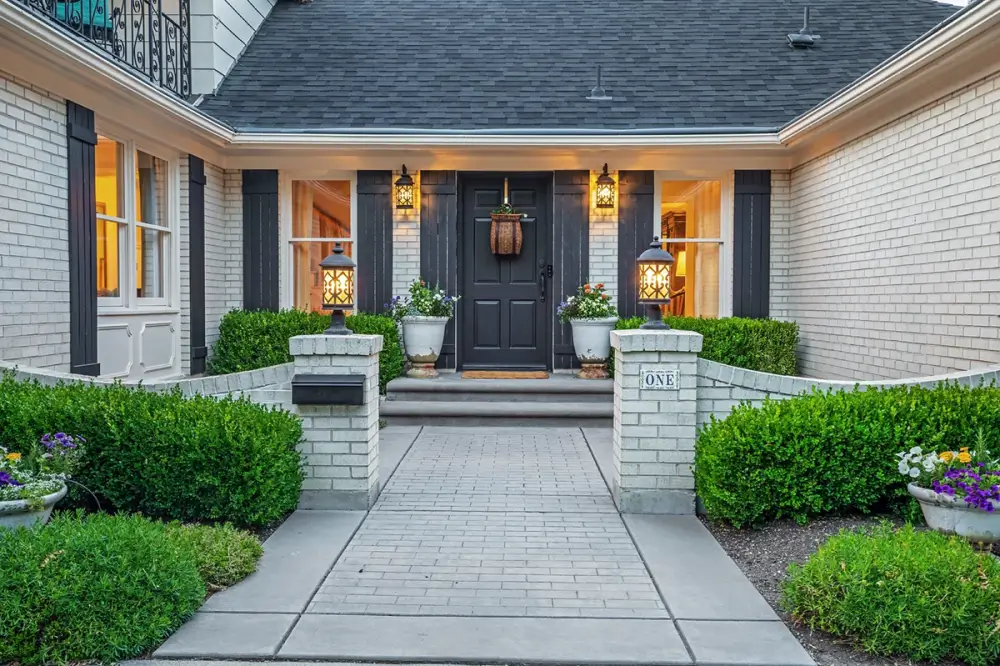
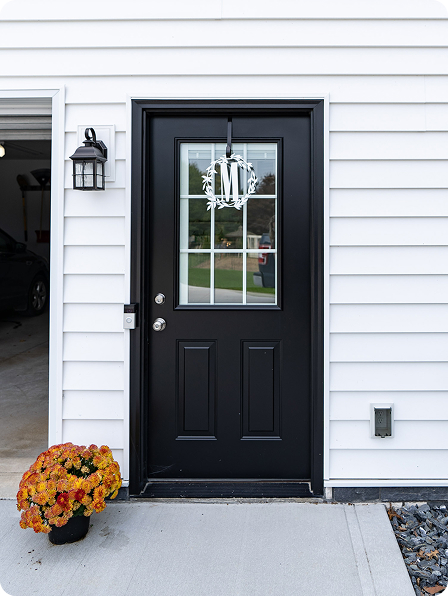
- Entry doors—The front and rear doors of the home. Available in fiberglass, steel, and engineered wood with laminated impact glass inserts. Most homeowners replace these first because they're typically the most exposed and the easiest single project. Browse FAS's entry door options to see configurations.
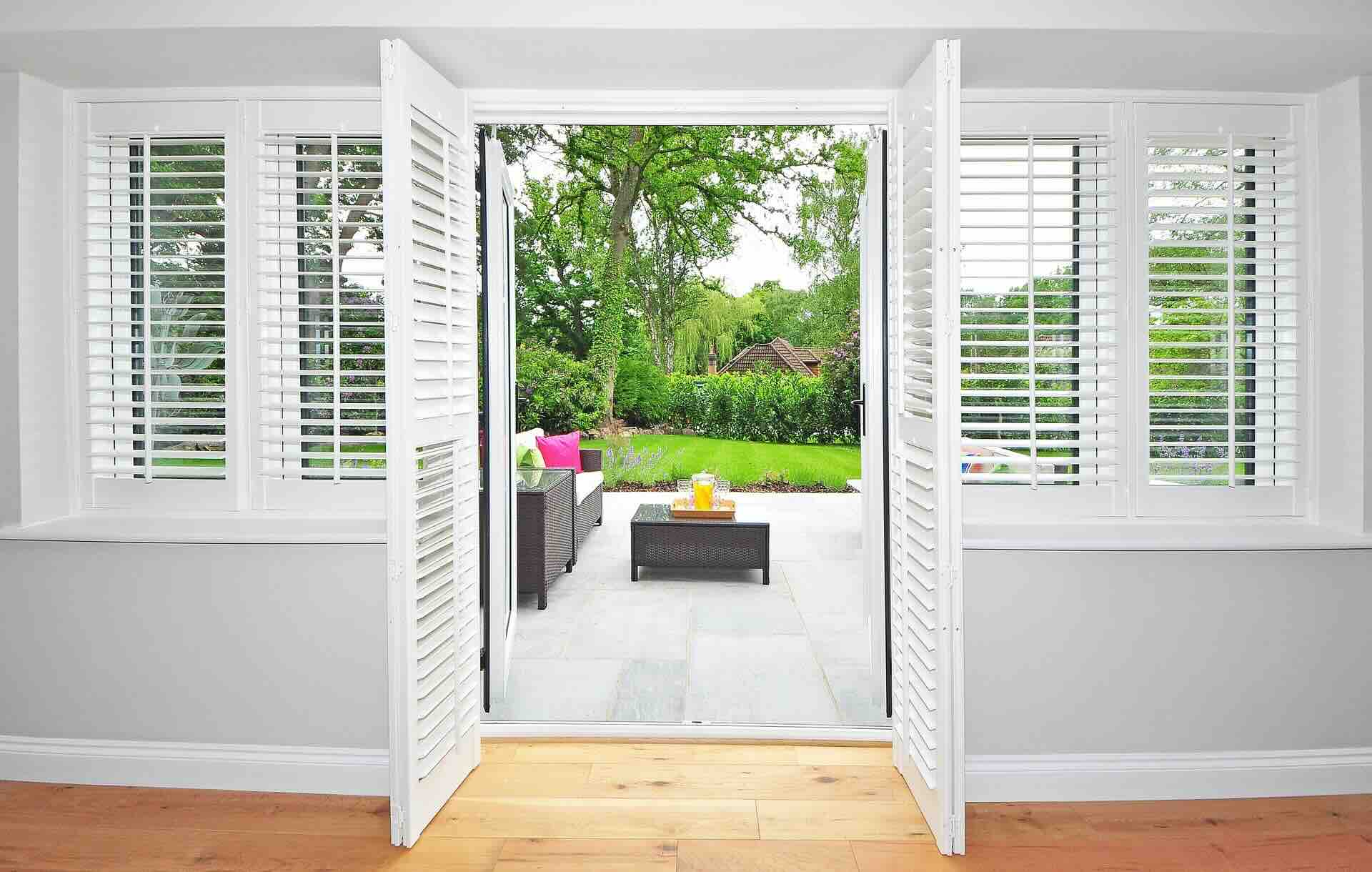
- French doors—Two-leaf doors that swing outward or inward, often opening onto a patio or backyard. Hurricane-rated French doors have astragal posts, the vertical seal where the two door panels meet, multipoint locking, and laminated glass, with significantly more engineering than a standard French door. See FAS's French doors for impact-rated options.
- Sliding patio doors—These are big glass openings that face the lanai or pool, the most vulnerable openings on most Florida homes because of their size. Impact-rated versions use heavy laminated glass panels with reinforced rails. FAS offers several patio door configurations including bifold, multislide, and pocket designs.
- Garage doors—Often forgotten in the impact-door conversation, a garage door blowout during a hurricane's one of the most common ways in which homes lose roof structure. Impact-rated garage doors are sold separately from house doors, but should be part of the same upgrade plan.
For most Florida homes, the highest-impact upgrade sequence goes: entry doors first because it's the highest exposure at the lowest cost, followed by sliding patio doors, with the largest single opening, and then French doors and other secondary entries.
Materials that Actually Hold Up in Florida
Material choice matters more in Florida than almost anywhere else. Coastal humidity, salt air, and 95°F summers will destroy the wrong door material in a few years.
- Fiberglass—The most popular choice for Florida homes, fiberglass resists rust, won't warp, handles humidity, looks like wood without the maintenance, and is energy-efficient. Suitable for inland and most coastal applications.
- Aluminum—Strong yet lightweight, it's ideal for large glass-panel designs and sliding systems. Powder-coated or anodized aluminum holds up well to coastal exposure. Common in patio and French door frames.
- Steel—The strongest material per inch, steel's vulnerable to rust and corrosion in coastal environments unless it's powder-coated. Best for inland Florida or as security-focused entry doors with proper finish.
- Wood and engineered wood—Beautiful, but high-maintenance in Florida's climate, it's not recommended for primary exterior doors in coastal exposure unless you're committed to ongoing care. Engineered or clad-wood options provide better moisture resistance.
For most homeowners in Orlando, Tampa, Palm Harbor, and Winter Park, fiberglass entry doors plus aluminum-frame patio and French doors gives the best long-term combination of resilience, code compliance, and low maintenance.
Cost of Hurricane Impact Doors
Impact-door pricing varies widely based on size, style, glass type, and customization. Realistic 2026 ranges for installed costs in Florida consist of:
- Standard fiberglass entry door: $1,500-3,500
- Custom or decorative entry door: $3,500-7,500+
- French doors (pair): $4,000-9,000
- Sliding glass patio door (single opening): $4,500-12,000
- Multislide or bifold patio system: $8,000-25,000+
A whole-home impact-door upgrade for a typical Florida house including front entry, rear slider, and one side door typically runs $9,000 to $20,000 installed.
Several factors push pricing up or down:
- Glass type—Decorative, low-E, or impact-rated insulated glass units cost more than standard laminated
- Size—Tall doors (8-foot vs. 6-foot-8) carry a premium
- Frame material—Custom wood's expensive; standard fiberglass's value choice
- Sidelights and transoms—Each additional opening adds 25-50% to door cost
- Hardware—Multipoint locks, smart locks, and decorative hardware add $200-1,500
- Existing opening condition—If the structural opening needs reframing or anchor reinforcement, expect $500-2,000 in additional carpentry
For more detail on how impact doors compare to impact windows in your overall hurricane budget, see our companion piece on hurricane windows vs impact windows.
Insurance Discounts and Tax Incentives
This's where the math turns. Florida homeowners who install code-compliant impact doors typically qualify for three financial offsets.
Wind Mitigation Insurance Discounts
Florida Statute 627.0629 requires insurance carriers to offer premium discounts for verified wind-mitigation features. Impact-rated doors are one of the qualifying features. Discounts are verified through a wind mitigation inspection (form OIR-B1-1802) performed by a licensed inspector and submitted to your carrier.
Typical savings range from 15 to 45 percent on the wind portion of the premium, depending on the home, the carrier, and the combination of upgrades. For example, on a $4,000 annual premium, that's $600 to $1,800 every year for the doors' lifespan.
My Safe Florida Home Grants
The state-funded My Safe Florida Home program provides matching grants up to $10,000 for qualifying wind-mitigation home improvements including impact doors and windows. Funding is limited and reopens periodically so check the program's current status before assuming availability.
Federal Energy Efficiency Tax Credits
Some impact doors with insulated glass qualify for the federal Energy Efficient Home Improvement Credit under IRS Section 25C, worth up to 30 percent of cost, capped at $250 per door, $500 total. The door needs to meet ENERGY STAR criteria for your climate zone, but verify with the manufacturer's National Fenestration Rating Council (NFRC) label.
Combine all three, and a $15,000 impact-door project can recoup $5,000 to $10,000+ over its first decade through insurance savings, grants, and tax credits.
Benefits Beyond Storm Protection
Impact doors earn their keep year-round, not just during hurricane season.
- Security—Laminated glass's extremely difficult to break through. Burglars who try to smash a window or door panel quickly give up because the glass holds together even when cracked. Reinforced frames and multipoint locks make forced entry harder still.
- Noise reduction—The laminated glass and tight weather seals significantly reduce outside noise. Homeowners near busy roads, airports, or active neighborhoods often cite this as the most-noticed daily benefit. Look for doors with published sound transmission class (STC) ratings of 35+ for meaningful improvement.
- UV protection—Impact glass blocks 99 percent of ultraviolet (UV) light, which protects flooring, furniture, and artwork from fading.
- Energy efficiency—Tight seals plus insulated glass reduce air infiltration and heat transfer. Over a typical Florida summer, this translates into cooling savings, often $200 to $600 per year for a fully upgraded home envelope.
- Property value—Florida real estate listings routinely highlight impact-rated openings as a selling feature. South Florida studies suggest impact-protected homes sell faster and command three to seven percent premium pricing.
Impact Doors vs. Hurricane Shutters
The most common alternative to impact doors is a standard door paired with hurricane shutters. The choice, however, has tradeoffs.
Hurricane Shutters
With a lower upfront cost, typically $500 to $3,000 per opening for accordion or roll-down systems, hurricane shutters protect just as effectively against debris when deployed correctly. However, they require manual deployment before every storm, take up storage space when not installed, block all light when closed, and don't deliver any year-round benefits like noise reduction or insurance maximization.
Impact Doors
Requiring zero preparation, impact doors cost two to three times more upfront, but all you have to do is lock the door, and you're done. They protect even when you're out of town, deliver year-round security, energy, and noise benefits, and qualify for the maximum insurance discounts, which partial protection often doesn't.
Pairing impact doors with impact windows qualifies your home for the highest available wind mitigation credits.
For most Florida homeowners staying in their homes long-term, impact doors make better financial sense over a 10-year horizon. For homeowners planning to sell within three to five years or who have constrained budgets, shutters can be a reasonable interim solution.
Florida Code Compliance and HVHZ Zones
Florida's High-Velocity Hurricane Zones (HVHZ), Miami-Dade and Broward counties, have stricter requirements than the rest of our state. Doors installed in HVHZ must carry a Miami-Dade NOA in addition to (or instead of) Florida Product Approval.
Outside the HVHZ, in Orlando, Tampa, Palm Harbor, and Winter Park, the Florida Product Approval (FL#) is the relevant standard. Pinellas, Hillsborough, and Orange counties all enforce this through the local building department's permitting process. For a deeper look at where Florida code requires impact-rated openings and where it doesn't, see our companion piece on whether impact windows are required in Florida.
Be aware of a couple of important compliance points:
- Permits—They're required for impact door installation in essentially every Florida jurisdiction. Self-installed or unpermitted doors don't qualify for insurance discounts and can create issues at home sale.
- Installation matters as much as the product—A correctly tested door installed incorrectly's no longer code-compliant. Anchoring, sealing, and frame attachment must follow the manufacturer's tested installation method exactly. This's why certified installation's not negotiable.
You can search any product's approval status at the Florida Product Approval database before signing a contract.
Choosing a Florida Installer
Choosing the right installer matters as much as choosing the right door. A $15,000 impact-door project installed incorrectly won't be code-compliant, covered by warranty, or eligible for the insurance discounts that make the finances work. Three rules separate good outcomes from bad ones, worth applying rigorously because the cost of cutting corners shows up years later in failed inspections, denied claims, or storm damage that should have been prevented.
- Verify contractor's license with the state—All impact-door installers in Florida should hold a current contractor license. Confirm it yourself at the Florida Department of Business and Professional Regulation before signing anything. Take note of the license number, issue date, and any disciplinary history listed on the record.
A legitimate contractor will offer this information upfront; if you have to ask twice or pull it yourself, treat it as a red flag. Confirm general liability and workers' compensation insurance certificates as well and have them sent directly from the insurer rather than forwarded by the contractor.
- Confirm product approval handling—A reputable installer will provide the FL# or NOA for every door they propose in writing before installation begins. Ask them to walk you through the approval document so you understand what you're buying; the approval covers the specific door, glass type, and frame configuration.
Small substitutions like a different glass thickness or a nonapproved hinge can void the certification entirely. The installer should also handle the wind mitigation inspection paperwork (form OIR-B1-1802) that triggers your insurance discount. If they push that responsibility back onto you, they're not the right installer as proper documentation's part of the job.
- Get itemized quotes from at least two installers and compare them—Pricing for the same door system can vary 20 to 30 percent between installers based on overhead, target margin, and how badly they want the work. Itemized quotes also let you compare door brand, glass spec, frame material, and hardware on equal footing rather than getting confused by lump-sum bids that hide what you're actually getting.
Ask each installer to break out door slab, frame and threshold, glass type and impact rating, hardware, installation labor, permit fees, debris removal, and any structural framing work. If a particular quote's dramatically cheaper than the others, find out why before celebrating; it's usually a substitution somewhere, often in the glass or anchoring.
Beyond these three rules, watch for behavioral red flags that distinguish reputable installers from the rest. Door-to-door solicitations after a major storm are almost always storm-chaser operations from out-of-state contractors who descend on Florida after a hurricane and then disappear before warranty claims come due.
Pressure tactics such as "this price is only good today" signal a sales operation rather than a contractor. Requests for full payment upfront violate Florida law for most residential contracts. Standard practice is a deposit of 10 to 30 percent, with progress payments and final payment on completion. "Lifetime warranties" that aren't backed by the door manufacturer are marketing language, not coverage. The warranty's only as good as the company standing behind it, and small operators come and go in this industry.
The licensed local installer with verifiable references, a physical address in your service area whether that's Orlando, Palm Harbor, Tampa, or Winter Park, and a history of permit-pulled work in your county's almost always the right choice. The cost difference between the cheapest bid and the right installer's typically 5 to 15 percent, and it's the most reliable insurance you'll buy on the entire project.
Authoritative Information Sources:
- Energy Star: Residential Windows, Doors, & Skylights
- Energy Star: Windows, Doors, and Skylights Climate Zone Finder
- Florida Department of Business & Professional Regulation (DBPR): Product Approval: Product or Application Search
- Florida Department of Business & Professional Regulation (DBPR): Verify a Licensee
- Internal Revenue Service (IRS): Energy Efficient Home Improvement Credit
- Miami-Dade County: Product Control Search
- My Safe Florida Home
- The Florida Legislature: The 2025 Florida Statutes: 627.0629: Residential Property Insurance; Rate Filings
Frequently Asked Questions about Hurricane Impact Doors
Take a look at the questions Florida homeowners commonly ask once they start shopping seriously for impact doors.
Q: Are impact doors required by law in Florida?
A: Not statewide for residential properties, except in HVHZ counties (Miami-Dade and Broward). Outside HVHZ, you can still install nonimpact doors, but they may require hurricane shutters to meet wind protection requirements at the building envelope level, especially for new construction.
Q: Can I install impact doors myself?
A: Technically you can buy them, but unpermitted, self-installed doors won't qualify for code compliance, insurance discounts, or wind mitigation credits. Most jurisdictions will also fail the work at sale or appraisal time.
Q: How long do impact doors last?
A: Quality impact doors last 25-40+ years with minimal maintenance. The laminated glass interlayer can degrade over decades, but typically outlasts the surrounding hardware. Aluminum and fiberglass frames hold up indefinitely in Florida if installed correctly.
Q: Do I need to replace all my doors at once?
A: No, but consider exposure. Most homeowners start with the front entry door and the largest patio opening, the most exposed and most vulnerable. A phased upgrade over 2-3 years is common and keeps the budget manageable.
Q: Will impact doors raise or lower my home insurance?
A: Lower, in nearly every case. Wind mitigation discounts under Florida Statute 627.0629 typically reduce premiums 15-45%. Make sure that your installer provides the documentation needed for the wind mitigation inspection.
Q: Do impact doors work with smart home systems?
A: Yes. Most impact doors accept standard or smart deadbolts including Schlage Encode, August, and Yale options. The locking system needs to be Florida Product Approved as part of the door system, but most major smart locks have approved configurations.
Q: How do impact doors handle Florida's heat and humidity?
A: Better than standard doors. The tight seals reduce moisture infiltration, and modern fiberglass and aluminum frames don't warp or swell with humidity changes. Insulated glass options also significantly reduce heat transfer.
Don't Wait Until There's a Storm in the Gulf
The worst time to shop for impact doors is the week in which the National Hurricane Center (NHC) starts naming weather systems. That's just when lead times stretch, prices firm up, and good installers get booked out for months.
The best time's now: between hurricane seasons, when manufacturers are running incentives, installers have flexible scheduling, and you've time to compare options properly.
FAS Exteriors installs hurricane impact doors for homeowners in Orlando, Tampa, Palm Harbor, and Winter Park. We carry Florida-approved entry doors, French doors, and patio doors from manufacturers including PGT, Provia, and Neuma, and we handle the permits, the wind mitigation paperwork, and the installation as a single project.
Schedule your free hurricane impact door consultation, and we'll come to your home, look at every exterior opening, talk through the right product for your exposure and budget, and give you a clear, itemized quote with no pressure and no salesperson tricks.
Having Trouble With Your Home's Exterior Doors?
Upgrade your doors with confidence! Get a personalized quote today and see how easy it is to transform your home.
Call for Consultation