By Cubby McMenamy
You have one year from the date of loss to notify your insurer (Florida changed this from two years in December 2022).
Florida's “25% rule” can require a full roof replacement if more than a quarter of the roof is damaged within a 12-month rolling window, but recent law changes carved out exceptions.
Hurricane deductibles typically run 2-5% of dwelling coverage, not a flat dollar amount. On a $400,000 home, that's $8,000-20,000 out of pocket before insurance pays anything.
Insurers can require an inspection for any roof 15 years or older and may refuse to renew if the roof has less than five years of useful life left.
Documentation is everything; claims get denied not because damage didn't exist, but because homeowners couldn't prove it.
Working with a licensed Florida roofing contractor from day one significantly improves claim outcomes; the adjuster works for the insurance company, not for you.
Filing a roof insurance claim in Florida means navigating a one-year notification deadline, a 25% rule that can require full roof replacement, hurricane deductibles of 2% to 5% of your dwelling coverage, and inspection requirements for roofs 15 years or older. Getting any one of these wrong can cost you the entire claim.
Your Roof Took a Hit; Now What?
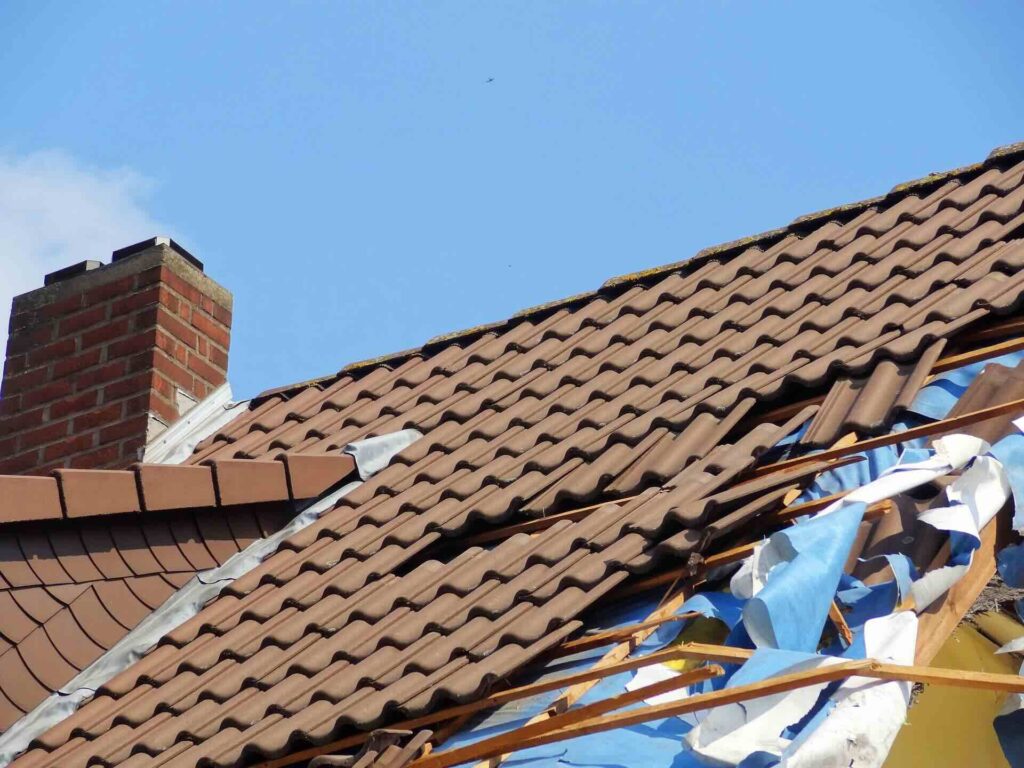
That moment when you walk outside after a storm and see shingles in the yard… your stomach drops. You already know what's coming. A claim, adjusters, phone calls. And in the back of your mind, the worry that the insurance company might make it harder than it should be.
You're not wrong to be nervous. Florida's roof insurance landscape changed dramatically between 2021 and 2023, and most homeowners are still operating on outdated information. The rules are stricter, the deadlines are shorter, the deductibles are bigger, and the burden of proof has shifted onto the homeowner.
The good news is that our guide will give you a clear, current playbook. Follow it, and you'll put yourself in the strongest position to get your roof properly repaired or replaced without absorbing thousands in surprise out-of-pocket costs.
What Changed in Florida Roof Insurance Law
Florida's insurance market has been in crisis for years. To stabilize it, lawmakers passed several major reforms that directly affect roof claims.
The biggest shift came with Senate Bill 2A, signed in December 2022, which:
- Cut the deadline to notify your insurer from 2 years to 1 year from the date of loss
- Cut the supplemental claim window to 18 months from the original date of loss
- Eliminated one-way attorney fees in property insurance lawsuits, making it harder (and more expensive) to sue insurers over denied claims
Earlier reforms like Senate Bill 76 (2021) and Senate Bill 4-D (2022) reshaped the “25-percent rule” and tightened contractor solicitation rules.
The revised deadlines matter even more given current Florida roof replacement costs. The impact is that you have less time, less leverage, and less margin for error than Florida homeowners did just a few years ago. Speed and documentation matter more than ever.
Step 1: Read Your Policy Before You Need It
Most homeowners don't read their policy until something goes wrong. By then, it's too late to learn that hurricane damage has a separate deductible or that your coverage is “actual cash value” (ACV) rather than “replacement cost value” (RCV).
Look at your policy right now and search for:
- Dwelling coverage amount—This is the rebuild value of your home; the number all your deductibles get calculated from.
- Standard deductible—Usually $1,000-2,500.
- Hurricane deductible—Usually a percentage of dwelling coverage. For example, on a $400,000 policy with a 2-percent hurricane deductible, your out-of-pocket is $8,000 before any payout.
- ACV vs. RCV coverage—RCV pays the full cost of a new roof minus deductible. ACV subtracts depreciation based on roof age; on a 15-year-old roof, that subtraction can be brutal.
- Roof age provisions—Some newer policies cap roof reimbursement based on age, even with RCV coverage; given how long roofs typically last in Florida, this provision affects almost every homeowner with a roof over 12 years old.
- Ordinance and law coverage—Critical in Florida, this is the endorsement that pays the difference between repairing damaged sections and bringing the whole roof up to current building code.
Take a screenshot of the declarations page and save it on your phone as well as in cloud storage so you can easily find it after a storm.
Step 2: Document the Damage Like It's Going to Court
Because it might.
The single most common reason roof claims get denied or under-paid in Florida is insufficient documentation. Insurance companies have professional adjusters, and you need to be your own adjuster.
Right after the storm, do the following:
- Photograph the roof from all four sides of the house, ground level
- Take photos of any debris, shingles, flashing, or gutter sections that ended up in the yard
- Photograph inside the home (for instance, water stains on ceilings, attic insulation, walls, and baseboards)
- Use your phone's timestamp feature so that each photo carries a date
- Save everything to cloud storage immediately in case you drop, damage, or lose your phone
If you have prior photos whether from a real estate listing, a previous inspection, or even a casual photo of the house with the roof visible, pull those out, too. Prior-condition evidence is golden when an insurer says that damage preexisted.
Don't climb on the roof yourself unless you truly know what you're doing. Roof falls kill homeowners every storm season. Your contractor or adjuster can get the close-up shots later.
Step 3: Notify Your Insurer Fast (Within Days, Not Weeks)
Florida law gives you one year, but you should be on the phone within 48 to 72 hours. The "late notice defense" is one of the most-used denial tools in insurance carriers' arsenal.
When you call:
- Have your policy number ready
- State the date of loss (for hurricane damage, this is the day the storm made landfall, not the day you noticed the leak)
- Give a general description of damage, but don't speculate or estimate cost
- Ask for and write down the claim number, adjuster name, hurricane deductible amount, and expected adjuster visit timeframe
- Get the date, time, and representative name in your records
Florida Statute 627.70132 also imposes deadlines on the insurer once you file; they must:
- Acknowledge your claim within 7 days
- Conduct a physical inspection within 30 days of receiving proof of loss
- Pay or deny within 60 days in most circumstances
If the insurer misses those deadlines, it's a strike in your favor.
Step 4: Get a Professional Roof Inspection: From Your Side
The part that most guides gloss over is that the insurance adjuster works for the insurance company. They're there to settle the claim at the lowest amount the company can defend.
You need someone on your side. A licensed Florida roofing contractor will:
- Conduct an independent, professional damage assessment
- Document storm damage in technical language that an adjuster will respect
- Identify damage often missed in remote drone or satellite assessments
- Be present at the adjuster visit to walk through findings together
- Provide a detailed repair or replacement estimate that meets Florida Building Code requirements
This is where having an established relationship with a local roofer matters because they need to know the local building codes, the wind zone requirements, and the inspectors who'll be reviewing the permits. Our roofing teams in Orlando, Palm Harbor, Tampa, and Winter Park regularly handle insurance-related inspections.
Step 5: Adjuster Visit: Show Up Prepared
The adjuster visit is the single most important meeting in your claim. Show up unprepared, and the assessment will shape everything that follows.
Before the visit:
- Confirm the appointment time in writing
- Have your contractor scheduled to be present
- Print or pull up your damage documentation
- Know your deductible amount and policy limits
During the visit:
- Walk through every documented damage point in a logical sequence: exterior first, then interior.
- Let your contractor speak to technical damage details because they speak the same language as the adjuster.
- If the adjuster uses drone or satellite imagery instead of physically inspecting the roof, note it; remote assessments routinely miss damage.
- Stay cooperative and professional even if you disagree with what the adjuster's saying.
Don't argue, accept a settlement on the spot, or sign anything without carefully reading it. You'll get a written estimate after the visit. Review it against your contractor's estimate before responding.
Understanding the "25-Percent Rule" and Why It Still Matters in 2026
The "25-percent rule" is one of the most misunderstood provisions in Florida roofing law.
The original rule was that if more than 25 percent of a roof was damaged or repaired within a 12-month period, the entire roof had to be brought up to current Florida Building Code. In most cases, this meant a full replacement.
Senate Bill 4-D (2022) softened it: if the existing roof was built or replaced after March 1, 2009, and meets the 2007 Florida Building Code or later, partial repairs may be allowed even if the damaged area exceeds 25 percent.
For older roofs, the original rule still applies. If your roof predates 2009, a storm that damages 26 percent of it can legally require a complete tear-off and rebuild to current code.
This is where ordinance and law coverage becomes essential. The insurer's generally only obligated to restore the property to its preloss condition rather than upgrade it to current code. The gap between those two costs is what ordinance and law coverage is designed to fill.
If you live in a high-wind zone, which almost all of Florida qualifies for, that code-required upgrade can add thousands of dollars to a replacement. Without ordinance and law coverage, you're paying it.
If you're weighing repair vs. replacement, our roofing services overview walks through what each option entails.
Hurricane Deductibles: Number Most Homeowners Get Wrong
A standard deductible is a flat dollar amount. A hurricane deductible is a percentage of your dwelling coverage. They're not the same thing, and many homeowners don't realize the difference until a claim arrives.
For example, a home in Tampa with $400,000 dwelling coverage and a 2-percent hurricane deductible, will have a $1,500 deductible for a standard claim like a falling tree vs. an $8,000 deductible for a hurricane claim.
Hurricane deductibles typically range from 2 to 5 percent, depending on your policy. On the high end, that can be $20,000 or more out of pocket before insurance contributes a single dollar.
Florida Statute 627.4025 defines exactly when the hurricane deductible kicks in: from the moment the National Hurricane Center (NHC) issues a hurricane warning anywhere in Florida until 72 hours after all hurricane warnings are lifted. Damage that occurs in that window even from nonhurricane causes can trigger the higher deductible.
Run the numbers before you file. If your damage estimate's close to or below your hurricane deductible, filing may cost you a rate increase without producing any payout.
Roofs 15 Years and Older: Special Rules Apply
Florida law now allows insurance companies to require an inspection of any roof 15 years or older as a condition of coverage. If the roof can't demonstrate at least five years of remaining useful life, the insurer can:
- Refuse to renew your policy
- Exclude roof coverage entirely
- Require an immediate replacement at the homeowner's expense
For homeowners in Orlando, Tampa, Palm Harbor, and Winter Park with aging roofs, this changes the math. Proactive inspections before storm season give you documentation, time to negotiate, and leverage that disappears once damage's on the table.
If your roof's approaching 15 years and you haven't had it professionally inspected, get one scheduled now. The cost of a routine inspection is a fraction of a forced nonrenewal.
What to Do If Your Claim's Denied
Roof claim denials occur for predictable reasons:
- Insufficient documentation of damage
- Missed deadlines (the late-notice defense)
- Preexisting damage arguments
- Wear-and-tear exclusions for older roofs
- Disputes over the cause of damage (wind vs. flooding, for example)
If you receive a denial, don't panic and definitely don't ignore it. Take the following steps:
- Read the denial letter carefully—It should specify the policy provision that the insurer's relying upon and will indicate to you what you need to challenge.
- Request a copy of the adjuster's report—You're entitled to it.
- Get a second professional inspection—Have a licensed contractor who regularly handles storm damage and roof repair produce an independent damage assessment.
- File a supplemental claim if new damage's discovered—You've 18 months from the original date of loss.
- Consider a public adjuster—Public adjusters work for the homeowner, not the insurance company, and take a percentage of the settlement.
- Consult a Florida property insurance attorney—lf you believe that the denial appears to be in bad faith, know that Florida's 2022 reforms changed attorney fee rules, but legal recourse still exists for clear-cut wrongful denials.
The Florida Department of Financial Services also operates a free Division of Consumer Services helpline that can mediate insurance disputes and walk you through your formal complaint options.
Carefully Choose Your Contractor
After a major storm, "storm chasers" descend on Florida, with out-of-state contractors going door to door, promising to handle your claim, often pressuring quick signatures and partial payments up front. Avoid them!
Know that by Florida law:
- It's illegal for a contractor to waive or pay your insurance deductible
- Contractors can't offer referral fees for insurance claims
- Public adjusters and attorneys must be properly licensed in Florida
When evaluating a roofer for an insurance claim, look for:
- Current Florida contractor license; verify with the Florida Department of Business and Professional Regulation
- Local presence and an established address in your area whether Orlando, Tampa, Palm Harbor, Winter Park, or wherever your home is
- Direct experience with insurance claims and adjuster negotiations
- Manufacturer certifications (from GAF, Owens Corning, CertainTeed, and similar)
- Workers' compensation and general liability insurance, with certificates available on request
- Strong reviews on Google, the Better Business Bureau (BBB), and Florida-specific review platforms
Keep in mind that a reputable contractor doesn't pressure, doesn't ask for full payment up front, and doesn't promise specific claim outcomes before seeing your roof. FAS Exteriors meets all of these criteria across our service areas.
Authoritative Information Sources:
- Florida Department of Financial Services: Florida Building Code
- Florida Department of Financial Services (DBPR): Disaster Information and Resources
- Florida Department of Financial Services (DBPR): Division of Consumer Services
- Florida Department of Business & Professional Regulation (DBPR): Verify a License
- Florida Roofing and Sheet Metal Contractors Association, Inc. (FRSA): Changes in the 2026 9th Edition of the Florida Building Code
- National Oceanic and Atmospheric Administration (NOAA): National Hurricane Center (NHC): Atlantic
- The Florida Legislature: The 2025 Florida Statutes: 627.4025: Residential Coverage and Hurricane Coverage Defined
- The Florida Legislature: The 2025 Florida Statutes: 627.70132: Notice of Property Insurance Claim
Frequently Asked Questions (FAQ) about Filing a Roof Insurance Claim in Florida
Below are answers to the questions Florida homeowners ask most often when considering making a roof insurance claim.
Q: How long do I have to file a roof insurance claim in Florida?
A: One year from the date of loss for the initial claim, and 18 months from the original date of loss for supplemental claims. These deadlines were shortened by Senate Bill 2A in December 2022.
Q: Will filing a claim raise my insurance rates?
A: It can, especially if the claim's small or denied. Claims for catastrophic events like named hurricanes are often treated differently than nonstorm claims. If your damage’s close to your deductible, weigh the expected payout against potential rate increases.
Q: Does insurance cover an old roof?
A: It depends on policy specifics. Many newer Florida policies require inspections for roofs 15 years or older and may pay only Actual Cash Value (ACV), depreciated value, rather than Replacement Cost Value (RCV). Some carriers won't cover roofs older than 20-25 years at all.
Q: What's the difference between repair and replacement coverage?
A: Repair coverage pays to fix damaged sections only. Replacement coverage pays to replace the entire roof. The "25% rule," your roof's age, and your specific policy language all influence which one applies in your situation.
Q: Can I file a claim without a contractor's involvement?
A: Technically, yes, but you really shouldn't. The insurance adjuster works for the insurer. Without a licensed contractor advocating for your interpretation of the damage, claims are routinely underpaid.
Q: What if my roof's damaged, but the damage's below 25%?
A: Under current Florida law (postSenate Bill 4-D), partial repair’s permitted if the existing roof meets the 2007 Florida Building Code or later. Older roofs may still require full replacement under the original "25% rule."
Q: Are public adjusters worth it?
A: For complex claims, often yes. They typically charge 10-20% of the settlement and work entirely for the homeowner. For simple, clearly-covered claims, the cost may not be justified.
Get Your Roofing Expert Before Calling the Insurance Company
A roof insurance claim in Florida is winnable, but the rules have shifted over the last few years, and insurance carriers know it better than most homeowners do.
Those homeowners who come out of the claims process with a fully repaired or replaced roof rather than a five-figure surprise bill document early, file fast, read their policy, and bring a licensed local contractor into the conversation from day one.
If your roof has taken damage from a recent storm or if you're approaching the 15-year mark and haven't had an inspection in years, the time to act's before the problem gets worse. FAS Exteriors handles roof inspections, storm-damage assessments, and full replacements for homeowners across Orlando, Tampa, Palm Harbor, and Winter Park. We're experienced in working alongside adjusters to ensure that damage gets documented properly the first time.
Schedule your free roof inspection, and we'll come to your home, walk the roof, give you an honest assessment, and, if you've got an active claim, help you put together the documentation that gives you the strongest possible position.