Impact-resistant glass with a laminated interlayer is nonnegotiable for Florida homes in hurricane-prone areas
Low-E glass coatings significantly reduce heat gain, helping to lower your cooling bills
Florida Building Code sets strict requirements for patio doors, especially in High-Velocity Hurricane Zones (HVHZ)
Installing qualifying impact doors can unlock meaningful homeowners insurance discounts, by law
The right door style: sliding, French, or folding depends on your space, budget, and how you live
Professional installation is just as critical as the door itself; gaps and misalignment cost you in energy and safety
Choosing the best patio doors for Florida homes means balancing hurricane protection, energy efficiency, and lasting durability, and getting it wrong is a mistake you can't afford to make.
Having Trouble With Your Home's Exterior Doors?
Upgrade your doors with confidence! Get a personalized quote today and see how easy it is to transform your home.
Call for ConsultationWhether you live in Tampa, Orlando, Palm Harbor, or Winter Park, the Florida climate puts your home under extraordinary pressure year-round: relentless exposure to ultraviolet (UV) radiation, suffocating humidity, and a hurricane season that runs six months of the year. Your patio door faces all of it, every single day.
Why Patio Door Selection Is Different in Florida
Most home improvement advice is written for homeowners in the Midwest or the Northeast. Florida is a different world entirely, and generic guidance can steer you in the completely wrong direction.
Here's the reality: Florida has experienced at least one hurricane along every stretch of its coastline since 1850. The southeastern coastline is especially vulnerable, followed closely by the panhandle, making storm protection a critical part of home design. In Central Florida cities like Orlando and Winter Park, homeowners sometimes assume that they're far enough inland to skip impact-rated products. That assumption has cost people dearly.
Beyond storms, there's the daily grind. Florida's intense sun drives UV radiation through poorly rated glass, fading furniture and flooring while silently driving up your air conditioning bill month after month. The humidity warps, corrodes, and degrades materials not designed for the environment. Understanding these realities shapes every recommendation in this guide.
Nonnegotiables: What Florida Patio Doors Must Do
Before you start comparing styles and prices, you'll need to get clear on the minimum performance requirements that your next patio door must meet. Think of these as your baseline; everything else is a bonus.
Hurricane and Wind Resistance
Sliding glass doors are often the largest single glass feature in a home, and the weakest link when a storm hits. Their wide glass panels present a large surface area to wind and flying debris, and without proper reinforcements, a compromised sliding glass door can lead to significant water damage, shattered glass, or even structural failure due to rapid pressurization.
This isn't a scare tactic; it's physics. When a door or window fails during a hurricane, the sudden change in interior pressure can lift an entire roof section. One failed patio door can cascade into catastrophic structural damage.
Compliance with Florida Building Code
Florida building codes often require hurricane-resistant door systems in specific zones, and one of the first things inspectors look at is the frame. In High-Velocity Hurricane Zones (HVHZ) such as Miami-Dade and Broward counties, homeowners must use doors that meet strict impact and wind-load requirements, which include reinforced framing.
Even if you live in Tampa, Palm Harbor, or the Orlando area, which fall outside the strictest HVHZ designations, the Florida Building Code still mandates meaningful impact protection standards. Any licensed contractor working on your home is legally required to install compliant products. If someone quotes you a price on noncompliant doors, consider that a red flag, not a deal.
Energy Performance Ratings
The Florida Building Code Energy Conservation edition specifies that sliding glass doors and glazed door components must be included in fenestration calculations and sets the maximum solar heat gain coefficient (SHGC) requirements. In plain terms, Florida has rules about how much heat your patio door glass is allowed to let into your home.
The two numbers you need to know are:
- Solar heat gain coefficient (SHGC)—Measures how much solar heat comes through the glass. Lower is better for Florida's hot climate.
- U-Factor—Measures the door's overall insulation ability. Lower means better insulation.
Any dealer worth working with can walk you through the specific SHGC and U-Factor ratings for every product they carry.
Impact Glass: Heart of Florida Patio Door Performance
When people talk about "impact doors," the glass itself is doing most of the work. Understanding how it works will help you to evaluate products and ask the right questions.
Laminated Impact Glass
Laminated glass holds broken glass from scattering by holding it together with a strong interlayer. The inner layer acts like a cushion, softening the force of flying debris and lowering the risk of glass failure.
When struck by a piece of roof tile or a tree branch traveling at hurricane speed, laminated glass may crack, but it holds together. Your home stays sealed.
Tempered Glass
Tempered glass undergoes a rapid cooling process that increases surface and edge compression, resulting in strength levels of at least 10,000 psi. This specialized method makes the glass significantly more resistant to impact, which is why many hurricane sliding doors use tempered outer panels to better withstand intense wind loads and debris.
Many premium Florida patio doors combine both: a tempered outer panel for initial impact resistance, and a laminated inner panel to hold everything together if the outer layer is breached. This combination is worth asking about specifically when you are comparing products.
Low-E Glass Coatings
Beyond storm protection, low-emissivity (Low-E) coatings address your daily energy costs. Choosing a patio door with Low-E glass is a good option for Florida homes in sunny, hot climates.
The Low-E component reflects heat to keep it outside your home, contributing to lower energy bills and protecting carpet, flooring, curtains, and furniture against UV fading.
The right kind of glass doors and windows can save the average homeowner around $300 a year on heating or cooling costs. Over the lifespan of your door, that adds up to real money.
Patio Door Styles: Which One Is Right for Your Florida Home?
Here's where homeowners often get stuck because there are more options than most people realize, and each has genuine strengths and real trade-offs.
Sliding Glass Doors
The workhorse of Florida patio doors, sliding glass doors move along a horizontal track. They require no swing clearance and maximize the glass-to-wall ratio so that you get more light as well as more view.
Sliding patio doors are popular for their sleek, space-saving design and large glass panes that maximize natural light. Florida homeowners often favor sliding doors for their minimalist appeal and the ability to blend seamlessly with modern interiors. They provide an unobstructed view, connecting indoor spaces directly to patios, decks, and gardens, enhancing the Florida indoor-outdoor lifestyle.
In most cases, they're also the more affordable option. French doors usually cost 10-20% more than sliding glass doors, making sliding glass doors more affordable, especially when filling large openings.
Modern security has dramatically improved compared to older sliding door designs. Today's premium sliders feature multipoint locking systems, antilift blocks, and reinforced frames that make them genuinely difficult to breach during a storm or by an intruder.
Sliding glass doors are best for pool decks, large open-concept living areas, modern and contemporary home styles, space-constrained areas.
French Doors (Hinged Patio Doors)
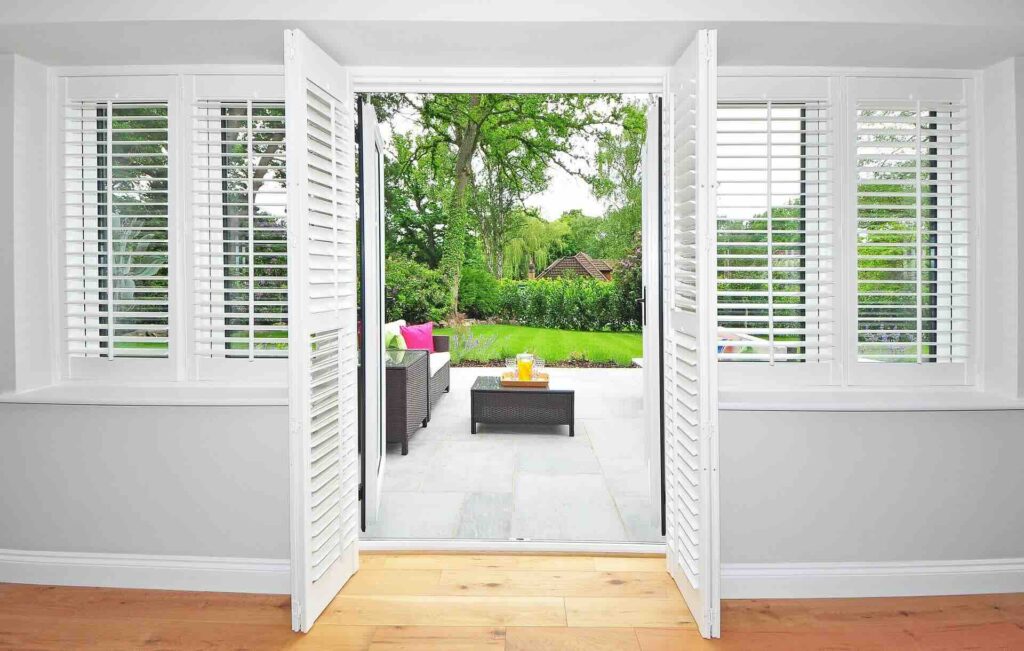
Renowned for their timeless, elegant look, French patio doors complement both traditional and modern homes. French doors bring a different energy to a home, with two panels that swing open from the center, all glass, creating a wide, welcoming opening with undeniable elegance. Florida homeowners may prefer French doors for their wide opening, which can accommodate more foot traffic and improve ventilation.
Impact-rated French doors are available and perform well. They feature full laminated glass panels with decorative grids that are cosmetic, not structural. You'll need to ensure that the swing direction: inswing vs. outswing works with your patio space and furniture layout.
Both French and sliding doors can be equipped with top-notch insulating glass. Double-pane or triple-pane glass, Low-E coatings, and argon gas fills significantly reduce heat gain from Florida sunshine and help to keep your home cool.
French doors are best for traditional, Mediterranean, cottage, and colonial-style Florida homes; formal outdoor living spaces, and homeowners prioritizing aesthetics and curb appeal.
Folding and Multislide Doors
If you want to make a bold architectural move, folding and multislide doors deliver it, transforming an entire wall into a wide-open connection between your indoor and outdoor living spaces. Folding (accordion-style) and multislide door systems use multiple panels that stack or fold to one side.
They're the premium choice in both price and lifestyle impact. Homeowners in Winter Park and upscale Tampa Bay area neighborhoods who have large, covered lanais increasingly opt for folding and multislide doors to connect their living space with their outdoor environment.
The trade-off is cost and maintenance. More panels mean more hardware, more seals to maintain, and a higher initial investment. However, for the right home and the right buyer, no other product comes close to the experience.
Folding and multislide doors are best for large lanais, entertainment-focused homes, luxury renovations, and homeowners who want the maximum indoor-outdoor connection.
Frame Materials: Florida's Climate Demands the Right Choice
How glass within a patio door performs matters enormously, but the frame holding it all together is equally responsible for how your door holds up over the long haul. The frame material you select will determine how well your patio door withstands Florida's heat, humidity, salt air, and UV exposure over time.
Vinyl
Many Florida homeowners lean toward vinyl patio doors for energy efficiency. Vinyl frames often have internal air chambers, don't conduct heat, and resist the warping or corrosion that metal may suffer in humid climates. Vinyl is also extremely low-maintenance; it doesn't need painting, sealing, or refinishing.
For Palm Harbor homeowners near the coast, vinyl's corrosion resistance is a meaningful advantage.
Aluminum
The material most associated with Florida construction, aluminum is strong, slim, and durable. Heavy-duty extruded aluminum frames resist wind loads. Door finishes and hardware made of aluminum resist corrosion and fading from intense UV rays, humidity, and salty air.
The trade-off is thermal conductivity; aluminum transfers heat more readily than vinyl or fiberglass unless it includes a thermal break. You should always ask whether the aluminum frame you're considering buying has a thermal break.
Fiberglass
The premium frame material for performance, fiberglass offers the best insulation of any frame type, doesn't warp or corrode, and can be finished to mimic wood grain. It's typically the most expensive option for patio doors, but delivers long-term value for homeowners who plan to stay in their homes for many years.
Wood
Wood frames are beautiful and naturally insulating, but Florida is hard on wood. Our state's humidity and insects means that wood requires ongoing maintenance to stay in good condition. Most Florida contractors recommend reserving wood for interior applications or, if you love the aesthetic, opting for wood-clad options such as a fiberglass core with a wood interior finish.
Florida Insurance Advantage You May Not Know About
Something that surprises many homeowners is that replacing your patio doors with qualifying impact-rated products can directly reduce your homeowners insurance premiums.
Adding mitigation improvements can make you eligible for discounts on the windstorm portion of your insurance premium. Insurance companies are required by law to offer mitigation discounts or credits. This is a legal requirement across the board in Florida, not just a program some insurers participate in.
For eligible homeowners, the My Safe Florida Home Program provides funds to obtain free hurricane mitigation inspections and matching grants to harden the home. For each $1 spent on mitigation improvements, the program provides $2, up to $10,000.
Homeowners may qualify for discounts up to a maximum of 88% on the windstorm portion of their premium when multiple qualifying mitigation features are in place. To access these discounts, you need a licensed inspector to complete the Uniform Mitigation Verification Inspection Form, after which your insurance agent will use that form to apply the credits to your policy.
If you're replacing patio doors anyway, the insurance math often makes impact-rated products more financially sensible than the cheaper nonrated alternative, especially when you factor in the avoided cost of hurricane damage to your home's interior.
What to Ask Your Contractor Before You Sign Anything
Not every door company in Florida operates with the same level of expertise or integrity. These questions help you separate the professionals from the fly-by-night operators.
- Are these products Florida Product Approved?
Every patio door installed under permit in Florida must carry a Florida Product Approval number. Be sure to ask for it in writing. - Are the products rated for my wind zone?
Design Pressure (DP) ratings vary. A door rated for the Orlando area may not be rated for a home closer to the coast in Palm Harbor or Tampa Bay. - Will you pull permits?
Any legitimate company pulls permits. Beware of any contractor who suggests skipping permits because they're offering you liability, not savings. - What does the installation warranty cover and for how long?
The door manufacturer's warranty and the installer's workmanship warranty are separate things. You need both. - Can you provide references from local projects?
A company doing quality work in the Tampa or Orlando area should have verifiable local references. - Are your installers licensed and insured?
Verify their Florida contractor license at the Department of Business and Professional Regulation before any work begins.
Energy Efficiency: How Your Patio Door Affects Your Monthly Bills
Florida homeowners spend more on air conditioning than almost anyone else in the country. Your patio door is a significant factor in that expense.
The performance gap between a standard builder-grade door and a modern high-performance replacement is substantial. The right kind of glass doors and windows can save the average homeowner around $300 a year on heating or cooling costs. Glass can be the weak link when it comes to inhibiting heat transfer through home walls.
The specific features that drive energy savings are:
- Double-pane glass with argon gas fill—The argon gas between the panes is heavier than air, which significantly slows heat transfer. Argon gas has thermal conductivity that's two-thirds that of air, effectively inhibiting heat transfer.
- Low-E coatings—In Florida's climate, a Low-E3 coating is usually recommended because it rejects solar heat rather than allowing it in.
- Proper weatherstripping and seals—A high-performance door installed with gaps or worn seals delivers none of its rated performance. This is why professional installation matters as much as product selection.
- Thermal break in aluminum frames—If you prefer aluminum for its durability and coastal suitability, insist on frames with a thermal break in order to prevent heat conduction through the frame itself.
What Florida Homeowners Need to Know
Local conditions, building codes, and environmental factors vary within our state, and your patio door decisions should reflect the specific area in which you live.
Orlando and Winter Park
Central Florida homeowners are inland, but not immune to storms and winds. Not only have hurricane-force winds reached Orlando in major storm events, but the area's intense summer sun makes Low-E glass coatings especially valuable for controlling cooling costs.
Winter Park's older housing stock often means that existing doors are well past their performance prime, making replacement both a safety and comfort upgrade.
Tampa
Located within one of the most statistically hurricane-vulnerable positions in the U.S., Tampa Bay's geography creates ideal conditions for storm surge and high winds. Impact-rated patio doors here are a practical necessity. Corrosion-resistant frame materials like vinyl or aluminum with proper finishes are worth prioritizing given Tampa's coastal humidity.
Palm Harbor
As a coastal Pinellas County community, Palm Harbor homeowners face the challenge of salt air corrosion on top of hurricane risk. We recommend vinyl frames or properly finished aluminum with corrosion-resistant hardware for homes in this areas. Also, any patio door facing west toward the Gulf needs to be rated for the coastal wind loads applicable to this area.
Installation: Why It Matters as Much as the Product
The best patio door money can buy will underperform or fail if it's installed incorrectly. This is one of the most important things homeowners underestimate during the buying process.
Even the highest-rated door on the market will underperform if the installation is the least bit off. Critical seals, jambs, and hardware need to be adjusted precisely in order to prevent air leakage and deliver the maximum possible energy savings and home comfort.
An experienced installation crew accounts for the condition of the rough opening, any structural adjustments needed, proper flashing to prevent water infiltration, and precise alignment of tracks and hardware. Shortcuts at any of these steps will cost you in performance, longevity, and potentially in water damage down the road.
When you're evaluating contractors, ask specifically about their installation process and what quality checks they perform after your patio door is installed. A company that only talks about the product but not the installation is indicating something important.
Matching Patio Doors to Your Home
Before you start calling for quotes, use our framework to help in your decision-making and narrow down the right door for your situation.
If your:
- Home has a large lanai, and you love to entertain: select a multislide or folding door system with aluminum frames and dual-pane, Low-E impact glass. The investment is higher, but the lifestyle transformation is significant.
- Priority is maximum storm protection on a budget: consider a vinyl-framed sliding glass door with laminated impact glass and a Florida Product Approval number. This is the most cost-effective path to genuine hurricane protection.
- Home has a traditional or Mediterranean architectural style: choose impact-rated French doors in fiberglass or aluminum with decorative grille options that will honor your home's character while delivering modern performance.
- Top goal is long-term energy savings: select a fiberglass-framed door with triple-pane glass, Low-E3 coating, and argon gas fill. It will cost more upfront, but the performance over 20-plus years justifies the investment.
- Home is in a coastal zone like Palm Harbor or the Tampa waterfront: prioritize corrosion-resistant hardware and frame finishes regardless of door style. Confirm that the product's Design Pressure rating is appropriate for your specific wind zone.
Red Flags to Watch for
The Florida home improvement market has its share of operators who don't have your best interests at heart, unfortunately. Watch for the following warning signs:
- Quote that's dramatically lower than all others without a clear explanation
- Salesperson who discourages you from getting multiple quotes
- No mention of permits or Florida Product Approval numbers
- High-pressure tactics urging you to sign on the same day
- Inability to provide a verifiable Florida contractor license number
- No physical address or established local presence
A company that operates with integrity in Florida will welcome your questions, provide transparent documentation, and give you time to make a thoughtful decision.
Sources of information:
- Florida Department of Business & Professional Regulation (DBPR): Florida Building Code
- Florida Department of Financial Services: Plan Prepare Protect: Mitigation
- Florida Office of Insurance Regulation: Premium Discounts for Hurricane Loss Mitigation
- Florida Division of Emergency Management: Wind Insurance Savings Calculator
Bottom Line about Choosing Patio Doors for Your Home
Choosing the best patio doors for your Florida home is more than an aesthetic decision; it's actually a safety decision, a financial decision, and a long-term comfort decision, all rolled into one.
The good news is that you can choose from excellent options available today. Modern, impact-rated patio doors protect your loved ones and you from storms, reduce your energy bills, lower your insurance premiums, and look beautiful doing it. There's never been a better time to upgrade.
If you're thinking about replacing your patio doors in the Orlando, Winter Park, Tampa, or Palm Harbor area, start with an honest conversation with a home improvement company that can assess your home, your climate exposure, and your budget. Based in Florida, FAS Exteriors specializes in doors, windows, and roofing, and we can walk you through that process without pressure or guesswork.
Contact us today to get your professional door evaluation; you deserve a home that holds up to the elements so let's start that conversation today.
Having Trouble With Your Home's Exterior Doors?
Upgrade your doors with confidence! Get a personalized quote today and see how easy it is to transform your home.
Call for Consultation